

Start here
Choosing the Right Spot
Next
Understanding and Preparing Your Soil
Then
What to Plant First
When you're ready
Watering, Feeding, and Keeping Things Alive
Before you commit
Common Beginner Mistakes to Avoid
Choosing the Right Spot
Site selection shapes everything that follows. Before you dig or buy a single seed packet, spend a few days observing your yard at different times of day to track sunlight. Most vegetables - especially fruiting ones like tomatoes, peppers, and cucumbers - need a minimum of six hours of direct sun daily. Leafy greens and herbs tolerate partial shade, but they still prefer bright conditions.
Beyond sun, consider these factors:
- Access to water: A spot within reach of a hose or spigot makes consistent watering far more likely to happen.
- Level ground: Sloped areas lose water to runoff; flat or gently graded spots retain moisture more evenly.
- Distance from large trees: Tree roots compete aggressively for water and nutrients, and overhead canopy creates shade.
- Proximity to the house: Gardens you walk past daily get tended. Out-of-sight plots often get neglected.
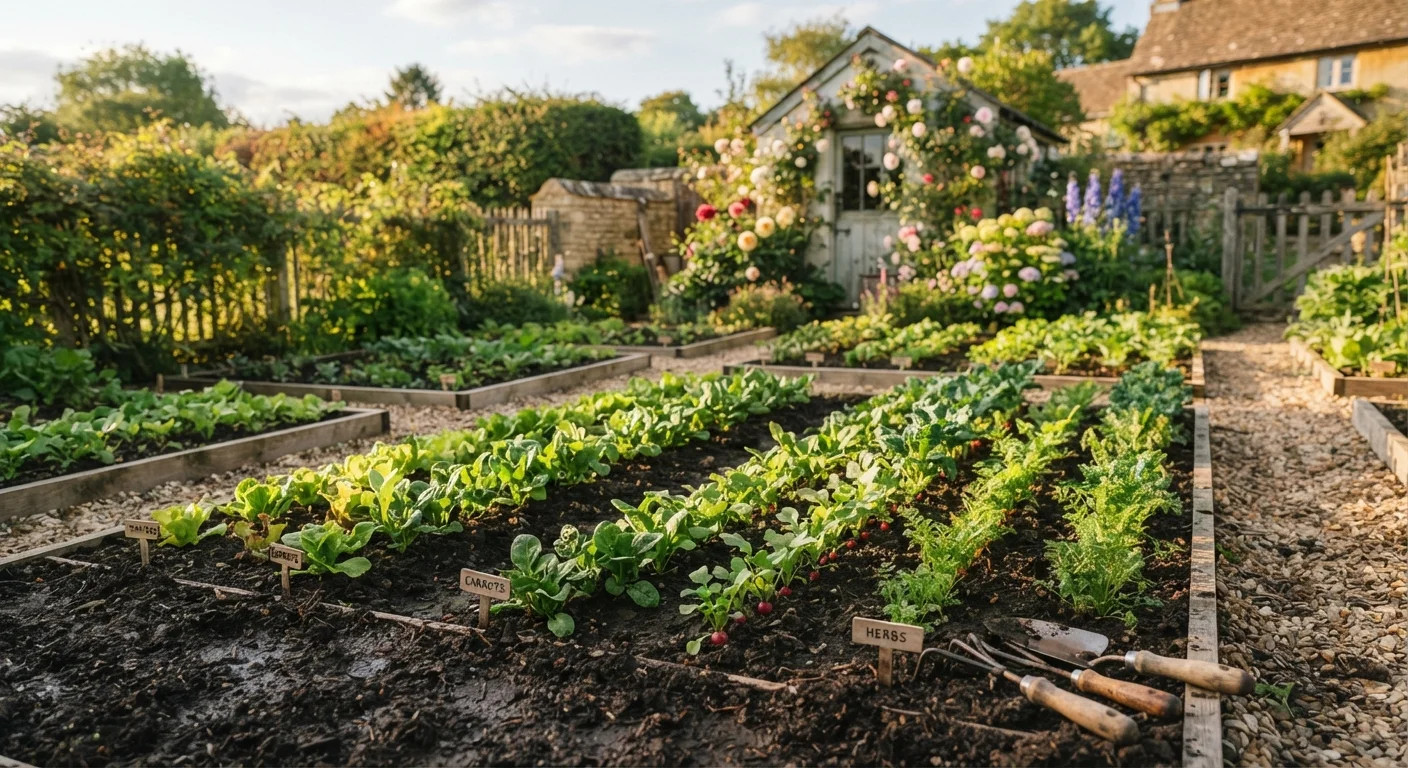
Once you've chosen a location, decide on your bed format. Raised beds and in-ground gardens each have real trade-offs - raised beds warm faster and drain better, while in-ground planting costs less upfront and suits larger spaces.
Observe Before You Dig
Spend at least three to five days watching how sunlight moves across your yard before settling on a garden location. What looks sunny in the morning may be shaded by afternoon. This simple observation step prevents one of the most common - and hardest to fix - beginner mistakes.
Understanding and Preparing Your Soil
Soil is not just dirt - it's a living system, and its quality determines how well your plants grow more than almost any other factor. Before amending anything, get a basic soil test. Many cooperative extension offices offer affordable testing kits that reveal your soil's pH and key nutrient levels. Most vegetables thrive in slightly acidic soil with a pH between 6.0 and 7.0.
Soil pH
A measure of how acidic or alkaline your soil is, rated on a scale of 1-14. Most vegetables grow best between 6.0 and 7.0, where nutrients are most readily available to plants.
Compost
Decomposed organic material - food scraps, leaves, plant trimmings - that improves soil structure, drainage, and fertility when worked into garden beds.
Succession sowing
Planting the same crop in small batches every two to three weeks rather than all at once, so you get a steady harvest instead of a single overwhelming glut.
Direct sow
Planting seeds directly into the garden bed rather than starting them indoors as seedlings. Crops like beans, carrots, and radishes perform better when direct-sown.
Frost date
The average date of the last expected spring frost or first expected fall frost in your area. Used to time planting so cold-sensitive crops aren't killed by a late freeze.
Nitrogen
A key plant nutrient that drives leafy, green growth. Too little causes yellowing; too much produces excessive foliage with little fruit or root development.
To improve soil structure and fertility, work in 2-4 inches of compost before planting. Compost improves drainage in clay-heavy soils, helps sandy soils retain moisture, and feeds the microbial life that makes nutrients available to plant roots. If you want to build a long-term compost supply at home, see our guide on building a backyard composting system that actually gets used.
Till or loosen the top 10-12 inches of soil, remove rocks and debris, and then rake smooth before planting. Avoid working soil when it's wet - doing so compacts it and destroys the structure you're trying to build.
What to Plant First
The fastest path to discouragement is starting with difficult crops. Choose varieties that reward beginners with reliable germination, fast growth, and visible results.
Reliable beginner crops include:
- Radishes: Ready in as little as 25 days; great for teaching kids and impatient gardeners alike.
- Lettuce and salad greens: Cut-and-come-again types produce for weeks and tolerate cooler weather.
- Green beans: Direct-sow seeds, minimal maintenance, heavy producers.
- Zucchini: Almost aggressively productive - one or two plants is often plenty.
- Cherry tomatoes: More forgiving than large slicing types and quicker to ripen.
Start small - a 4-by-8-foot bed is genuinely enough for a first season. Resist the impulse to plant everything at once. Staggered planting, called succession sowing, spaces out your harvest and prevents a feast-or-famine cycle.
Also consider plant relationships. Some combinations actively help each other - companion planting pairings that actually work can reduce pest pressure and improve yields without any extra inputs.
Watering, Feeding, and Keeping Things Alive
Most vegetable gardens need roughly one inch of water per week, from rain or irrigation combined. The key is depth, not frequency. Shallow daily watering encourages roots to stay near the surface, making plants more vulnerable to heat and drought. Water deeply two or three times a week instead, letting moisture soak down to where roots grow.
For water efficiency, drip irrigation outperforms overhead sprinklers for most vegetable beds - it delivers water directly to the root zone and keeps foliage dry, which reduces fungal disease. Drip systems and sprinklers water your garden very differently and knowing the differences helps you choose the right setup from the start.
For feeding, a balanced, slow-release fertilizer worked into the soil at planting covers most of a season's needs. Supplement with a liquid feed mid-season if plants show signs of nutrient deficiency - yellowing leaves are often the first clue. Avoid over-fertilizing with nitrogen, which produces lush foliage at the expense of fruit.
Pest and disease pressure is inevitable. Early intervention matters most. Evidence-based organic pest control methods - including physical barriers like row cover and encouraging beneficial insects - can manage most common problems without synthetic chemicals.
Mulch Makes a Real Difference
Laying 2-3 inches of straw, wood chip, or shredded leaf mulch around your plants conserves soil moisture, moderates soil temperature, and suppresses weeds all at once. It's one of the lowest-effort, highest-return practices in vegetable gardening and often overlooked by first-time growers.
Common Beginner Mistakes to Avoid
Most first-season failures trace back to a handful of predictable errors. Knowing them in advance puts you well ahead.
- Planting too much, too soon: Ambition outpaces time. A small, productive garden builds skills and confidence far better than an overwhelming large one.
- Skipping soil prep: Seeds and transplants planted into compacted, nutrient-poor soil rarely thrive, no matter how diligently you water.
- Ignoring frost dates: Planting warm-season crops before nighttime temperatures are stable can kill transplants overnight. Check your local last-frost date before you plant.
- Inconsistent watering: Irregular watering causes blossom drop in tomatoes and tip burn in lettuce. A simple watering schedule prevents most of this.
- Not planning for season's end: The garden doesn't stop needing attention when summer does. Fall garden prep - amending soil, clearing spent plants, protecting perennials - sets up next year's success.
Don't Skip the Local Frost Date
Planting warm-season vegetables like tomatoes, peppers, or basil before nighttime temperatures are reliably above 50°F can result in damaged or dead plants overnight. Your local cooperative extension service publishes frost-date data specific to your county - always check it before you plant in spring.
Frequently Asked Questions
Most fruiting vegetables - tomatoes, peppers, squash - need a minimum of six hours of direct sunlight per day to produce a decent harvest. Leafy greens and herbs can tolerate as little as four hours, making them better candidates for partially shaded spots.
A 4-by-8-foot bed is a manageable starting point that produces meaningful results without becoming overwhelming. Resist the urge to go larger in year one - a smaller, well-tended plot will consistently outperform a bigger neglected one.
A basic soil test is strongly recommended. It reveals pH and nutrient levels, letting you amend your soil precisely rather than guessing. Many cooperative extension services offer affordable testing, and the results take the guesswork out of fertilizing.
Radishes, green beans, zucchini, lettuce, and cherry tomatoes are widely regarded as forgiving starter crops. They germinate reliably, mature relatively quickly, and give you visible progress that helps sustain motivation through the season.
Most vegetable gardens need about one inch of water per week, either from rain or irrigation. Rather than watering lightly every day, aim for deep watering two or three times a week so moisture reaches the root zone where plants actually need it.
Timing depends on your local frost dates. Cool-season crops like lettuce and peas can go in four to six weeks before the last expected frost. Warm-season crops like tomatoes and peppers should wait until nighttime temperatures stay reliably above 50°F. Your local cooperative extension office can provide frost-date data for your area.
The content provided on our blog site traverses numerous categories, offering readers valuable and practical information. Readers can use the editorial team’s research and data to gain more insights into their topics of interest. However, they are requested not to treat the articles as conclusive. The website team cannot be held responsible for differences in data or inaccuracies found across other platforms. Please also note that the site might also miss out on various schemes and offers available that the readers may find more beneficial than the ones we cover.