

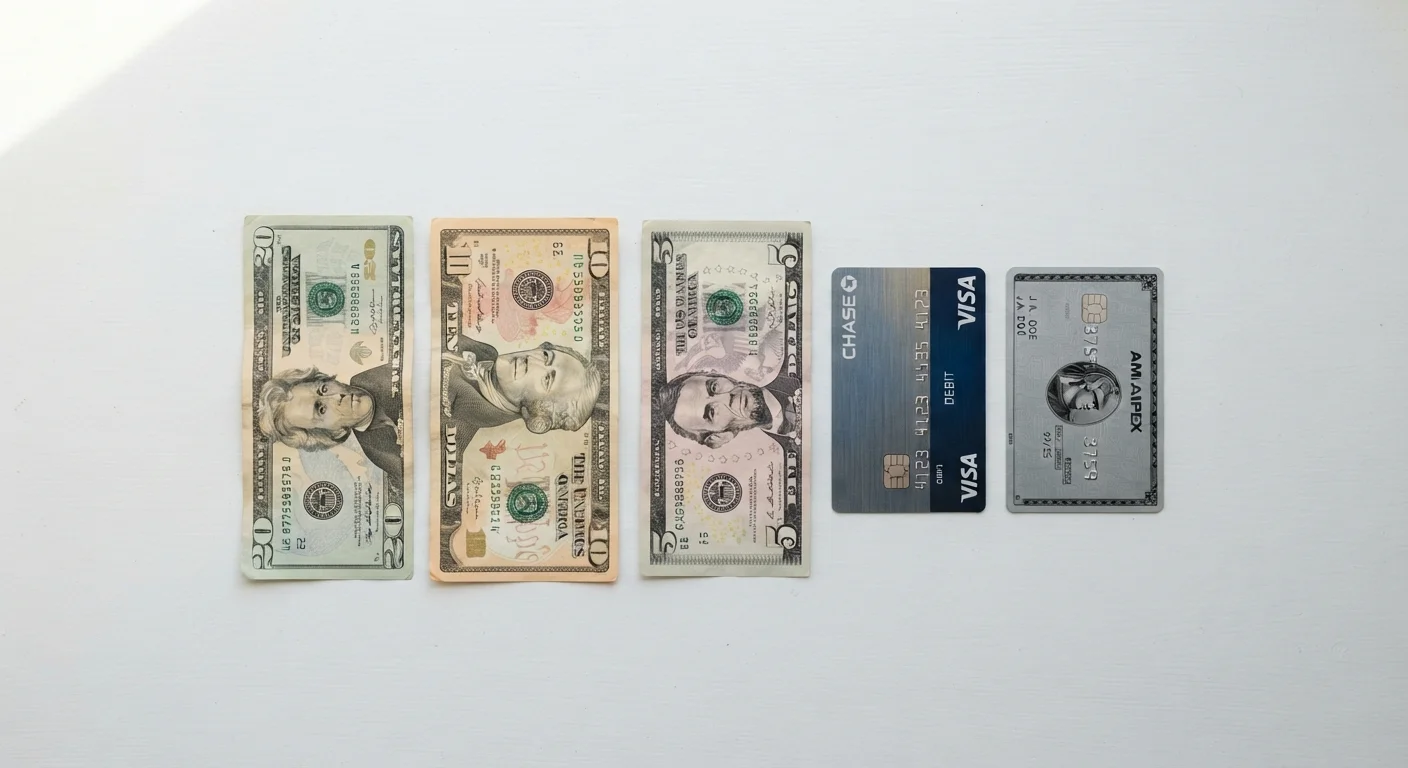
Our Verdict
No single payment method is universally superior - each involves trade-offs between convenience, protection, and spending discipline. The right choice depends on your personal habits, how reliably you track spending, and whether you carry a credit card balance. Understanding how each method influences your behavior is the first step toward using them deliberately.
| Best for | Recommended |
|---|---|
| Shoppers prone to impulse purchases or overspending | Cash |
| Those who want real-time budget limits without debt risk | Debit |
| Disciplined spenders who pay balances in full monthly | Credit |
| Anyone trying to build long-term intentional spending habits | A deliberate mix based on purchase category |
Why Payment Method Matters More Than You Think
Most people choose how to pay based on convenience - whichever card is in reach or whatever the merchant accepts. But behavioral research consistently suggests that payment method isn't neutral. It shapes how much psychological friction you feel when spending, which in turn influences how freely money flows out of your wallet.
This isn't about willpower. It's about how different payment formats interact with the brain's sense of loss. Understanding that dynamic is foundational to spending with purpose rather than habit.
Try a One-Week Cash Experiment
If you're unsure how much your payment method affects your spending, try using only cash for discretionary purchases for one week. Keep the receipts and compare your total to a typical week. Many people find the experience clarifying - not because cash is inherently better, but because the physicality makes each transaction harder to ignore.
Cash: The Friction Advantage
Handing over physical bills creates what researchers sometimes call the "pain of paying." When you watch a $20 leave your hand, the transaction feels tangible and final. Studies in consumer psychology have found that people tend to spend less - and remember their purchases more accurately - when paying with cash.
The trade-offs are real, though. Cash offers no fraud protection, no purchase records, and no rewards. If it's lost or stolen, it's gone. For large purchases, carrying cash is impractical. And for online shopping, it simply isn't an option.
Where cash tends to work best: grocery runs, dining out, or any category where you're prone to small impulse additions. Allocating a fixed amount for a spending category and using only cash for it is one of the oldest - and still effective - budgeting techniques.
~12-18%
More spent when using cards vs. cash
Multiple consumer behavior studies have found people tend to spend meaningfully more per transaction when using card payment versus cash, though exact figures vary by study and context.
83%
Americans who use non-cash payments regularly
Federal Reserve payment studies have consistently shown the large majority of U.S. consumers rely primarily on debit or credit cards for everyday purchases.
Debit: The Middle Ground
Debit cards draw directly from your checking account, which sounds like it should feel as immediate as cash. In practice, tapping or swiping reduces the psychological weight of spending - you don't see the money leave, and the transaction completes in seconds.
That said, debit does have a built-in guardrail: you can only spend what's in the account (assuming you haven't enabled overdraft coverage, which comes with its own fees and risks). This makes debit a reasonable choice for people who want to avoid credit card debt but find managing physical cash cumbersome.
Debit's main weaknesses are limited fraud protections compared to credit cards, and no rewards or purchase benefits. If a fraudulent charge hits a debit card, the money leaves your account immediately while the dispute is resolved - which can be disruptive to your cash flow.
Credit: Powerful Tools With Real Risks
Credit cards offer the strongest consumer protections of the three: disputed charges don't affect your account balance during investigation, purchase protection and extended warranties are common perks, and responsible use can build your credit history over time. For understanding how that history affects you, see our overview of managing debt and credit.
The risk is straightforward: credit cards make spending feel abstract. No money leaves your account at the moment of purchase, which research links to higher spending totals and more frequent impulse additions. If you carry a balance month to month, interest charges can significantly erode the value of any rewards earned. Minimum payments may seem manageable but extend debt far longer than most people realize.
Credit works well when it's used as a payment method rather than a borrowing tool - meaning the balance is paid in full each cycle. It's also worth monitoring credit utilization, which plays a significant role in your credit score.
| Cash | Debit | Credit | |
|---|---|---|---|
| Spending friction | High - physical loss feels immediate | Medium - funds leave account but feel abstract | Low - no immediate account impact |
| Fraud protection | None - lost cash is unrecoverable | Limited - funds removed during dispute | Strong - balance unaffected during dispute |
| Overspending risk | Low - limited to what you carry | Low-medium - limited to account balance | Higher - easy to spend beyond means |
| Rewards or perks | None | Rarely | Common - cash back, points, protections |
| Debt risk | None | Overdraft if enabled | High if balance carried month to month |
| Tracking ease | Manual - no automatic record | Automatic via bank statement | Automatic via card statement |
Choosing Deliberately - and Tracking What Happens
The most practical approach isn't picking one method and sticking to it across every purchase. It's matching the payment method to the spending context. Many people find that using cash for discretionary categories (dining, entertainment, clothing) while using credit for fixed, planned expenses (utilities, subscriptions) gives them both psychological guardrails and practical protections where they matter.
Whatever method you choose, tracking is what turns good intentions into actual results. Whether you prefer a notebook or a budgeting app, there are real trade-offs between each tracking approach worth considering. And if impulse spending is a recurring issue, understanding the mental triggers behind impulse purchases can help you catch yourself before checkout.
The goal isn't to restrict your life - it's to ensure your spending reflects your actual priorities rather than your payment method's psychological quirks.
This article is for general informational and educational purposes only and does not constitute financial or legal advice. Consult a qualified financial professional for guidance specific to your situation.
The content provided on our blog site traverses numerous categories, offering readers valuable and practical information. Readers can use the editorial team’s research and data to gain more insights into their topics of interest. However, they are requested not to treat the articles as conclusive. The website team cannot be held responsible for differences in data or inaccuracies found across other platforms. Please also note that the site might also miss out on various schemes and offers available that the readers may find more beneficial than the ones we cover.