

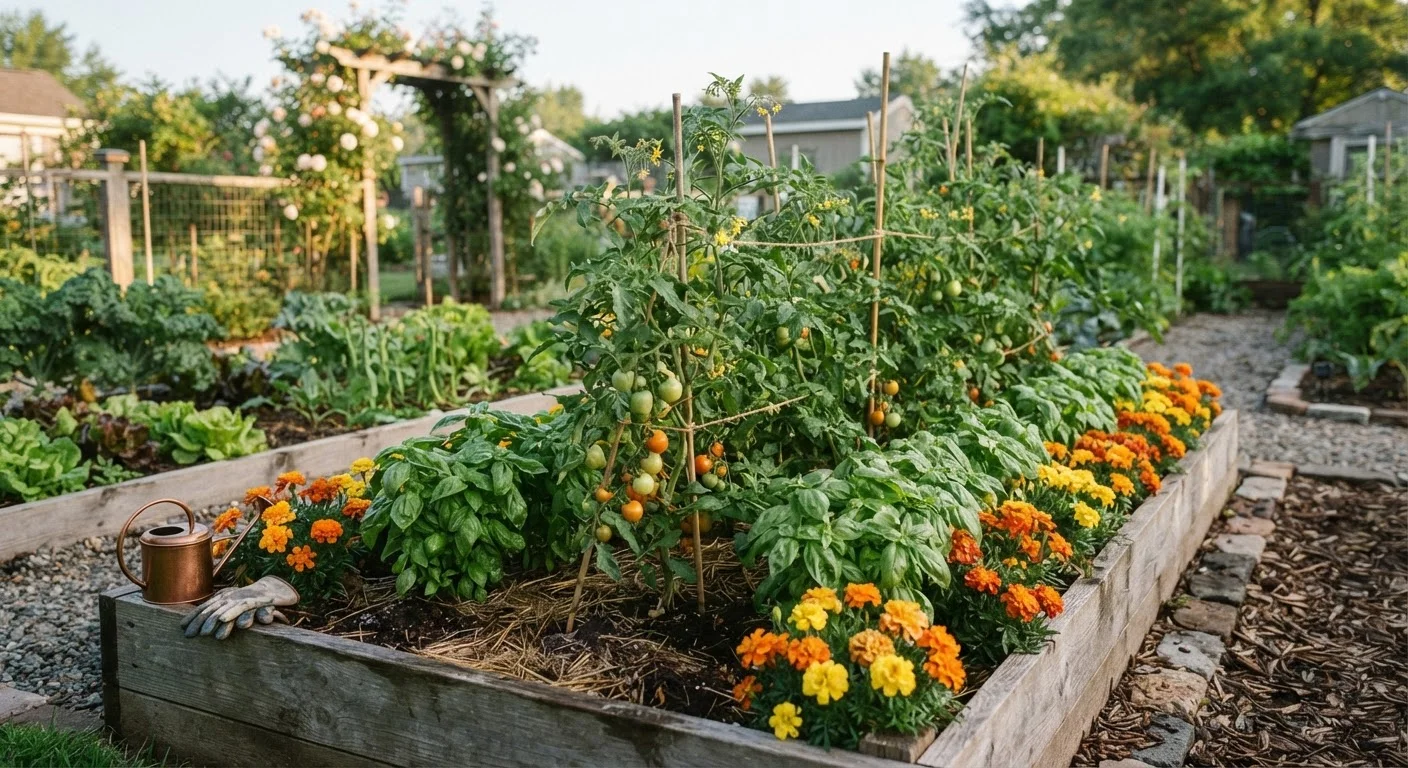
What Companion Planting Actually Means
Companion planting is the practice of growing different plant species near one another to produce mutual benefits - things like pest deterrence, improved pollination, nitrogen fixation, or better use of space. The idea has roots in Indigenous agricultural traditions, European cottage gardening, and 20th-century organic farming movements.
The challenge is that many claimed pairings were passed down through observation rather than controlled study. That doesn't automatically make them wrong, but it does mean results can vary widely depending on your climate, soil, and local pest pressure. If you're starting a vegetable garden from scratch, it's worth knowing which pairings have genuine support before designing your layout around them.
Below, we work through the most commonly repeated companion planting claims - separating those with solid evidence from those that deserve more skepticism.
Myth vs. Fact: Common Companion Planting Claims
These are some of the most widely circulated companion planting combinations in American home gardening. Each one is worth examining on its own merits.
Myth
Planting basil next to tomatoes makes tomatoes taste better.
Fact
There's no reliable scientific evidence that basil improves tomato flavor. The pairing does offer practical space efficiency and may support pollinator activity.
The flavor-enhancement claim is one of the most repeated in companion planting lore, but it hasn't held up in controlled trials. What the pairing does offer is practical: basil and tomatoes share similar water and sun needs, making them easy companions in terms of care. Some gardeners also report that basil's volatile oils may deter aphids and whiteflies in the immediate vicinity, though evidence for this is anecdotal rather than conclusive. Grow them together if you like - just don't expect a flavor upgrade.
Myth
The Three Sisters (corn, beans, squash) is just a Native American tradition with no practical value for modern gardens.
Fact
The Three Sisters system has well-documented functional benefits and remains one of the most evidence-backed companion planting approaches available.
This combination - developed and refined by Indigenous peoples of North America over centuries - demonstrates genuine polyculture advantages. Corn provides a vertical trellis for beans. Beans fix atmospheric nitrogen into the soil, benefiting the nutrient-hungry corn and squash. Squash leaves spread across the ground, shading out weeds and reducing soil moisture loss. Research in agroecology has supported these functional relationships. The system is most effective when planted in traditional mounded arrangements with adequate spacing. It's a worthwhile starting point for any gardener exploring polyculture techniques.
Myth
Marigolds repel all garden pests when planted anywhere in the garden.
Fact
Marigolds suppress specific soil-dwelling nematodes when planted densely over a full growing season - but they don't repel most above-ground pests.
French marigolds (Tagetes patula) produce compounds through their roots that are toxic to root-knot nematodes, a soil pest that damages many vegetables. This effect is real and has been replicated in research - but it requires dense planting over an extended period, not a few scattered plants at bed edges. Marigolds do little to deter beetles, caterpillars, slugs, or most other common garden pests. They do attract pollinators, which is a legitimate secondary benefit. Use them strategically for nematode management rather than as a catch-all pest solution.
Myth
Roses planted near garlic will be protected from aphids and blackspot.
Fact
Evidence for garlic protecting roses from aphids or fungal disease is largely anecdotal; results in home gardens are inconsistent.
This pairing is extremely popular in companion planting guides, but the science is thin. Some laboratory studies have found that garlic extracts can inhibit certain fungal spores, but growing whole garlic plants next to roses doesn't reliably translate those results into the garden environment. Aphid deterrence from garlic proximity is similarly unconfirmed at meaningful scale. If you enjoy the combination aesthetically and have the space, it's harmless - but it shouldn't replace proven rose care practices like appropriate pruning, good air circulation, and correct watering technique.
Myth
Planting fennel among vegetables improves the whole garden.
Fact
Fennel is allelopathic to many common vegetables - meaning it can actively inhibit the growth of neighboring plants, not help them.
Fennel is one of the clearest examples of a plant that should generally be kept away from vegetable beds rather than integrated into them. It releases compounds that inhibit germination and growth in many plants, including tomatoes, peppers, and beans. Dill is sometimes cited as a compatible companion for fennel, but even that pairing can lead to cross-pollination that degrades the flavor of both plants. Fennel is best grown in a container or a dedicated bed well away from your main vegetable garden. It's a useful culinary plant - just not a team player.
When planning your beds, remember that good soil health often matters more than plant proximity. No companion pairing will rescue crops growing in depleted or poorly draining soil.
How to Apply This in Your Garden
The most practical approach to companion planting is to treat well-supported combinations as default planning choices and unverified ones as low-stakes experiments. Here's how to do that sensibly:
- Start with documented pairings. The Three Sisters, tomatoes with basil, and marigolds for nematode suppression all have enough evidence to be worth incorporating deliberately.
- Keep notes. If you're trying a pairing with limited research behind it, record your observations over the season. Your local results matter.
- Don't overcrowd. Planting too close together to maximize companions can backfire - poor air circulation promotes fungal disease, and root competition can stunt both plants. Follow spacing guidelines for each species.
- Integrate with your overall design. Companion planting works best as one layer of a broader garden strategy. Whether you're using raised beds or in-ground planting, companions need room to do their job.
Overcrowding Cancels Out Companion Benefits
Planting companions too close together to fit in more combinations is one of the most common mistakes in companion planting. Insufficient spacing reduces air circulation, increases competition for water and nutrients, and creates conditions where fungal disease can spread quickly. Always check the mature spacing requirements for each plant species and prioritize those over pairing density.
If you're interested in the ecological side of plant relationships, native plants often support local insect communities in ways that non-native companions simply can't replicate.
The content provided on our blog site traverses numerous categories, offering readers valuable and practical information. Readers can use the editorial team’s research and data to gain more insights into their topics of interest. However, they are requested not to treat the articles as conclusive. The website team cannot be held responsible for differences in data or inaccuracies found across other platforms. Please also note that the site might also miss out on various schemes and offers available that the readers may find more beneficial than the ones we cover.