

Our Verdict
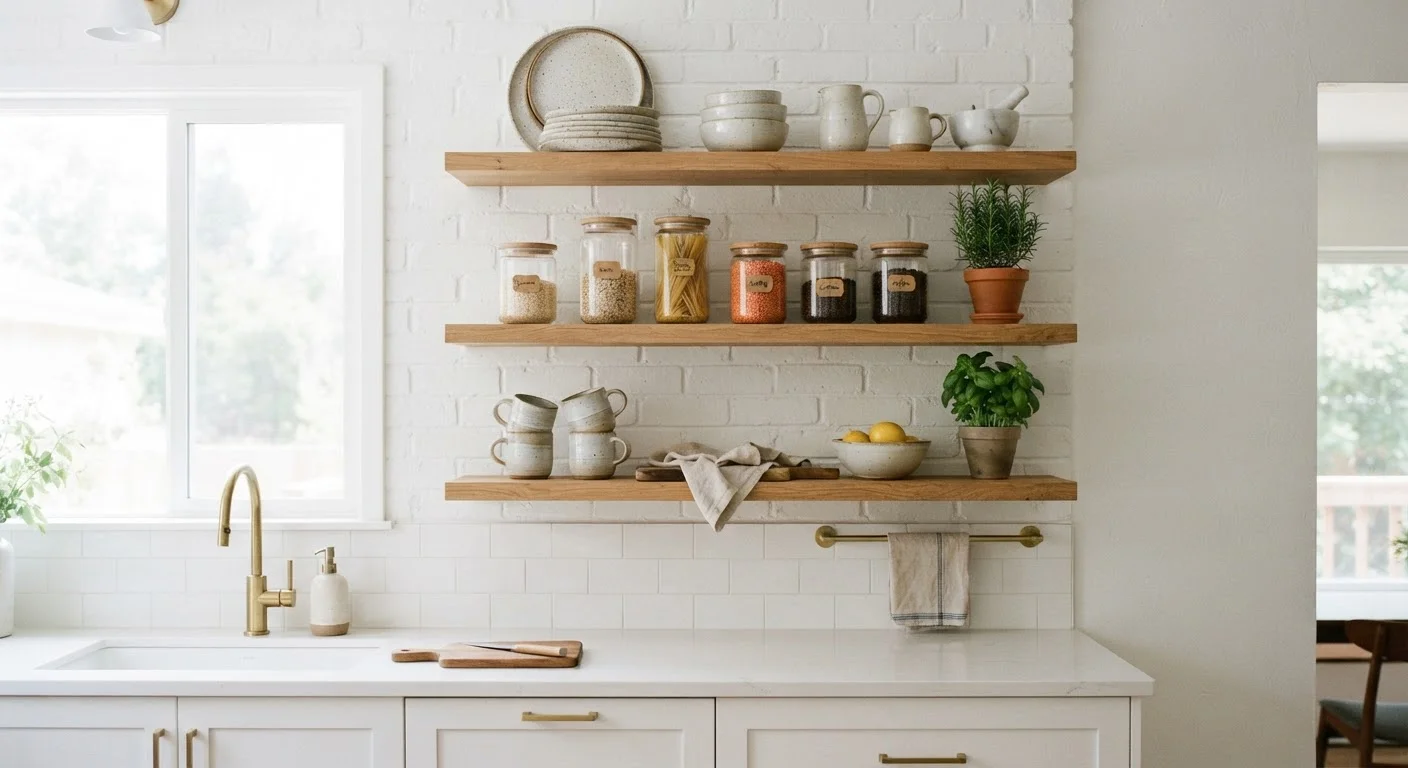
Open shelving delivers real visual appeal and everyday convenience when it suits your lifestyle - but it asks more of you in return. The trade-off between style and maintenance is genuine, and households that struggle to keep countertops clear will likely find open shelves stressful rather than freeing. Used thoughtfully alongside adequate closed storage, open shelves can be a practical and attractive kitchen feature.
Ideal for organized households who cook regularly, enjoy displaying dishware, and are willing to incorporate a quick weekly wipe-down into their routine.
What Actually Shifts When You Remove Cabinet Doors
Open shelving is one of those kitchen updates that looks effortless in design photos and requires genuine adjustment in real life. Once the doors come off - or new floating shelves go up - the kitchen operates differently in ways that aren't always obvious at the planning stage.
The most immediate change is visibility. Every item you store is now on display, which can feel freeing or pressuring depending on your perspective. Mugs, plates, and pantry staples that were previously tucked away become part of the room's aesthetic. That's the appeal, but it's also the commitment: clutter that was once hidden is now front and center.
The second shift is in how you use the space. Frequently used items become easier to grab without opening and closing doors. But less-used items - rarely pulled mixing bowls, seasonal serving platters - can feel awkward on open shelves where they accumulate dust and interrupt the visual flow you're trying to maintain.
Understanding these behavioral changes before installation helps you avoid the most common regret: converting more cabinet space to open shelving than your household's habits can realistically support.
The Genuine Advantages
Creates a sense of openness in smaller kitchens
Removing upper cabinet doors eliminates visual bulk and lets sightlines travel across the room, making compact kitchens feel less enclosed without changing a square inch of floor space.
Frequently used items are immediately accessible
Everyday dishes, glasses, and pantry staples are within reach without opening and closing doors, which genuinely speeds up food prep and table-setting routines.
Encourages intentional organization
Because everything is visible, many homeowners report keeping their kitchen more organized overall - the visibility creates a natural incentive to put things away properly.
Lower upfront cost than full cabinet replacement
Floating shelves typically cost significantly less than full upper cabinet installations, making them an accessible option for homeowners working within a tighter renovation budget.
Easy to customize and restyle over time
Shelf height, spacing, and arrangement can be adjusted relatively easily compared to fixed cabinetry, giving you flexibility as your storage needs change.
Beyond the visual payoff, one underappreciated benefit is functional: open shelves make it easier to spot when you're running low on something. There's no opening a door to discover you're out of coffee mugs or pasta. For households managing pantry inventory, that transparency has real practical value - though it's worth noting that buying in bulk can complicate open storage if you're stacking excess inventory where it's always visible.
Open shelves also make small kitchens feel less enclosed. Removing upper cabinet doors eliminates the visual weight of door panels and allows sightlines to travel further across the room, which genuinely affects how spacious a space feels - even if the square footage hasn't changed.
The Real Trade-Offs
Grease and dust accumulate quickly
Kitchen air carries airborne grease from cooking, which settles on open surfaces. Dishes and shelves can develop a grimy film faster than most homeowners expect, requiring weekly wiping to stay presentable.
Everything must always look presentable
There's no door to close on a messy stack of containers or a half-used box of cereal. Maintaining visual order on open shelves requires consistent daily habits, not just occasional tidying.
Less total storage capacity than closed cabinets
Enclosed cabinets allow stacking and organizing items in multiple rows and depths. Open shelves work best with single-layer displays, which reduces how much you can realistically store per shelf.
Items used rarely collect dust and look out of place
Seasonal serving dishes or infrequently used gadgets look neglected on open shelves and require cleaning before each use - defeating much of the convenience open shelving is supposed to provide.
Not well-suited to households with young children
Open shelves place breakable items, spices, and small objects within reach of curious hands. Reconfiguring storage to be child-safe can significantly limit the usability of open shelving.
Permits and Professional Help for Heavy Shelving
Most floating shelf installations don't require a building permit, but any work that involves cutting into walls, rerouting electrical, or carrying very heavy loads may warrant professional assessment. Always verify your local code requirements before beginning - requirements vary by municipality. When in doubt, consult a licensed contractor to confirm your wall anchoring approach is appropriate for the load you're planning to place on the shelves.
One structural consideration that's easy to overlook: the wall type matters significantly for shelf installation. Shelves carrying meaningful weight - stacked plates, cast iron, full jars - need anchors set into wall studs or appropriate anchors for masonry. If you're unsure what's behind your kitchen wall, consult a contractor before committing to heavy shelving. For a broader look at how structural assumptions can cause problems, see our article on what homeowners get wrong about load-bearing walls.
Making Open Shelving Work Long-Term
The households where open shelving genuinely succeeds tend to share a few traits: they cook regularly enough that shelf items stay in rotation (reducing dust buildup), they have enough closed storage elsewhere to keep less attractive necessities hidden, and they treat shelf arrangement as an occasional task rather than a burden.
~70%
Homeowners who cite regret over too much open shelving
Houzz renovation trend surveys have consistently found that a significant share of homeowners who fully converted to open shelving wish they had retained more closed storage.
2-3x
More frequent cleaning versus closed cabinets
Kitchen design professionals generally advise that open shelves in active cooking kitchens need wiping down two to three times more often than items stored behind closed doors.
A practical approach is to limit open shelving to one or two walls and retain closed cabinets for everyday items you'd rather not style - cleaning supplies, mismatched containers, bulky appliances. This hybrid layout captures the aesthetic benefit without demanding that every single item you own be display-worthy.
The design principles that apply to bathroom remodels - balancing open display areas with concealed storage - translate directly to kitchens. The goal in both spaces is to show what's worth seeing and store what isn't.
Finally, think carefully about shelf material. Sealed wood, metal, and laminate all resist kitchen grease better than raw wood or porous finishes. How a shelf is built and finished affects how long it stays looking good - a topic covered in depth in our guide on evaluating materials, build, and finish quality.
The content provided on our blog site traverses numerous categories, offering readers valuable and practical information. Readers can use the editorial team’s research and data to gain more insights into their topics of interest. However, they are requested not to treat the articles as conclusive. The website team cannot be held responsible for differences in data or inaccuracies found across other platforms. Please also note that the site might also miss out on various schemes and offers available that the readers may find more beneficial than the ones we cover.